Showing posts with label Yoga. Show all posts
Ajit

Procedure:
Closes the fist as in the picture. Keep the left hand thumb straight and the rest of the fingers clasped as shown in the picture.

Benefits:
  • It increases heat in the body and can cause sweating even in winter if done for a long time.
  • It helps in cold, coryza, asthma, cough, sinus problems and low blood pressure.
  • It dries phlegm.
Precautions:
  • When doing this Mudra please increase intake of water, fruit, fruit juices, clarified butter (Ghee) and milk.
  • DO NOT do this hand posture for a long duration.
Labels: , 0 comments | | edit post
Ajit

Procedure:
The tip of the middle finger is put at the base of the thumb and the thumb comes over the finger with slight pressure of the thumb being exerted on the finger as shown in the picture. The other 3 fingers are kept straight.

Benefits:
  • Regular practice of this Mudra helps in reducing ear pain and watering from the ears.
  • If this Mudra is done for 1 hour daily it can benefit in hardness of hearing.
  • The bones become strong and is beneficial in heart disease.
  • It strengthens gums and is helpful in throat problems and thyroid disease.
Precautions:
  • This hand posture should never be done while eating or walking.
  • After you are cured of these diseases, stop practicing this mudra.
Notes: But those who are handicapped inborn won’t benefit from this mudra.
Labels: , 0 comments | | edit post
Ajit

Procedure:
In this Mudra the tips of the thumb and the ring finger are touched together as in the picture. Rest of the fingers are kept straight.

Benefits:
  • It improves blood circulation throughout the body.
  • Increases patience and tolerance.
  • Increases concentration while meditating.
  • It helps strengthen weak and lean bones. Also increases weight of people suffering from low weight.
  • It reduces weakness, exhaustion and dullness of mind.
  • It makes you more beautiful by improving your complexion and giving a natural glow to your skin.
  • It improves the functioning of the digestive system and reduces the deficiency of vitamins.
Labels: , 0 comments | | edit post
Ajit

Procedure:
This Mudra is made by touching the tips of the thumb and the little finger.

Benefits:
  • It balances the water content in our body.
  • It activates fluid circulation within the body keeping it moisturized always.
  • It reduces dryness of the skin and improves skin lustre and softness.
  • It is useful in Skin diseases, acne and blood defects. It improves facial beauty.
  • It also relieves and prevents any muscle pains that you may suffer from.
Precautions: Persons suffering from Asthma and respiratory problems should do this Mudra for a short duration only.
Labels: , 0 comments | | edit post
Ajit

Procedure:
Fold your ring finger and press the second phalanx with the base of your thumb. Keep the rest of the fingers straight. This mudra should be practiced only in sitting position early in the morning with an empty stomach. Maintain this mudra for atleast 15 minutes every day.

Benefits:
  • It helps to dissolve the extra fat boosting metabolism and controls obesity.
  • Quickens digestion.
  • Improves body strength.
  • Reduces stress and tension.
  • Controls high cholesterol levels.
Caution:
But if you are suffering from acidity or indigestion, avoid this mudra.
Labels: , 0 comments | | edit post
Ajit

Procedure:
This Mudra is done by touching the tip of the ring finger to the base of the thumb and exerting pressure on the finger with the thumb as in the picture.

Benefits:
  • It balances the body,reduces body weight and obesity.
  • It increases body heat and helps in digestion.
  • It reduces hypertension and cholesterol and builds strength.
  • It is beneficial in diabetes and liver defects.

Precautions: Weak persons should not do this hand posture and DO NOT do this hand posture for a long time in hot weather.
Labels: , 0 comments | | edit post
Ajit

Procedure:
This Mudra is a combination of Vayu Mudra and Apan Mudra. The tips of the thumbs,the middle finger and the ring finger touch each other while the index finger touches the base of the thumbwith a slight pressure. The little finger remains straight.

Benefits:
  • It gives the benefit of Apan Mudra and Vayu Mudra as explained earlier.
  • It is helpful in Heart and Vayu diseases and gives health. People with a weak heart should do it daily. It is very beneficial to people who have just had a heart attack.
  • It removes gas from the stomach,aids in asthma,headache and high blood pressure.
Notes: If it is done 5 to 7 minutes before climbing stairs,it aids in easy climbing.
Labels: , 0 comments | | edit post
Ajit

Procedure:
This mudra is made by joining the tips of the thumb, the middle finger and the ring finger keeping the other fingers straight.
Benefits:
  • Toxins are removed from the body and the body becomes pure.
  • It also relieves constipation, piles, diseases caused by vayu or air, is helpful in diabetes, stoppage of urine,kidney defects and dental problems.
  • It is beneficial in stomach and heart diseases and brings out perspiration.
Labels: , 0 comments | | edit post
Ajit

The Organs of your body have their sensory touches at the bottom of your foot, if you massage these points you will find relief from aches and pains as you can see the heart is on the left foot.

Typically they are shown as points and arrows to show which organ it connects to.

It is indeed correct since the nerves connected to these organs terminate here.

This is covered in great details in Acupressure studies or textbooks.

God created our body so well that he thought of even this. He made us walk so that we will always be pressing these pressure points and thus keeping these organs activated at all times.

So, keep walking...
Labels: 0 comments | | edit post
Ajit

Procedure:
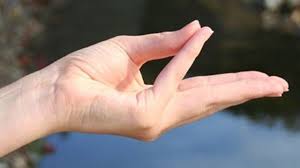
The tips of small and ring fingers should touch the thumb as shown in the picture. The remaining two fingers should remain straight.

Benefits:
  • It awakens the dormant power of prana gives energy,health.
  • It is beneficial in diseases of the eye and improves eyesight
  • It improves your immune system., reduces deficiency of vitamins, removes tiredness.
  • During fasting it reduces hunger pangs and thirst.

Notes: In insomnia, doing this hand posture, along with Gyan Mudra, helps in bringing on sleep.
Labels: , 0 comments | | edit post
Ajit

Procedure:
The index finger should be bent down and the thumb should be gently pressed over it. The remaining three fingers should remain straight.

Benefits:
  • As the name suggests vaayu mudra, it balances the air element within your body. This mudra releases excess wind from stomach and body thereby reducing rheumatic and chest pain.
  • All vayu ,that is, air related affections, like Arthritis,Gout, Sciatica,Knee pain,and gas are relieved.
  • This mudra is very useful for curing joint pains, paralysis and hysteria.
  • It especially benefits in neck pain and spinal pain.
Precautions: Once you achieve the benefits from this mudra, stop doing it. After a certain time, it may cause imbalance within your system.
Note: Done with Prana mudra, it gives quick results.
Labels: , 0 comments | | edit post
Ajit

Procedure:
Fourth finger(index finger)'s tip should touch fifth finger (the thumb) as shown in the picture. The remaining three fingers should remain straight.

Benefits:
  • Practice this mudra regularly to heal yourself of all mental and psychological disorders like anger, stress, anxiety or even depression.
  • This mudra help concentrating our mind on our objective.
  • It helps in meditation and concentration and reduces negativity of the mind.
  • It improves memory and with regular practice students can improve grades and intelligence.
  • It aids in alleviating headache, insomnia and hypertension and reduces anger.

Note: For better results do Prana Mudra after this Mudra
Labels: , 0 comments | | edit post
Ajit
There are 12 mantras with four parts to each mantra. The first part is the chanting of Aum, the second part is the chanting of a ‘bija mantra’, the third part is a part of a Rik from the Rig Veda and the fourth part is the addressing of one of the 12 names of Sun. There are six bija mantras. Each mantra consists of ‘h’, ‘r’, vowel and ends in ‘m’. The bija mantras are: ‘hraam’, ‘hreem’, ‘hruum’, ‘hraim’, ‘hroum’ and ‘hraha’ (where the vowels are ‘aa’, ‘ee’, ‘uu’, ‘ai’, ‘ou’ and ‘visarga or hah’. The twelve names of Sun are: Mitra, Ravi, Surya, Bhanu, Khaga, Pushan, Hiranyagarbha, Marichi, Aditya, Savitha, Arka & Bhaskara. These six Bija Mantras are repeated in sequence to cover the twelve names of the Sun God. The three Rig
Vedic hymns are used in the 12 mantras (one-quarter of the hymn used with each of these 12 names).

The chanting of AUM mantra activates stomach, heart, brain and the overall body/mind, thus creating vibrations in the associated chakras. Digestion, respiratory and sensory activities go thru the powerful lens of AUM turning intellect and memory into sharp and powerful tools.

The root alphabets of the Bija Mantra or Bija akshara are:

‘h’ –Heart is the source of its pronunciation. It empowers the heart to perform all its functions in a better manner.

‘r’ – The center of the forehead is the source of its pronunciation. The palate and the brain are gently buffeted by the vibration. The result is good taste and better intellect.

‘swar (vowel) – ‘a’, ‘i or e’, ‘u’, ‘ai’, ‘ou’, ‘ha’ - various organs are impacted by the sound vibrations, making these organs strong and sensitive.

  • Long aa as in ‘hraam’: vibrations stimulate brain, heart & respiratory organs
  • Long ee as in ‘hreem’: vibrations work on palate, vocal cord & nasal area
  • Long uu as in ‘hruum’: vibrations work on stomach, small intestine, pancreas (make digestive system strong)
  • Combined Vowel ‘ai’ as in ‘hraim’: vibrations work on kidney and urinary passage making the organs strong and sensitive.
  • Combined Vowel ‘ou’ as in ‘hroum’: vibrations work on excretory system making organs strong and sensitive.

‘visarga’ (hah) as in ‘hraha;– sound vibrations work on the chest and the vocal cord.

‘anunasik’ – created in the nasal area, the vibrations keep the nasal passage clean, soft and wet.

The back bending of the body (as in step 2 when the front of the body gets elongation while the back and the spine gets compressed), the forward bending to touch the ground with the hands (as in step3 when the front of the body gets compressed while the back and the spine gets elongated), the stretching and bending in other poses (as in steps 4, 5 and 6) as well as in steps 7 thru 12 provide the type of benefits to the human body that are not available by any other exercise regimen.

The mantras chanted while performing the Namaskar generate minute vibrations in the body which helps and corrects functioning of all systems of glands in the body. The whole Namaskar process tones up the functioning of all systems in the body like sensory, respiratory, circulatory, digestive and nervous systems. Balanced state of mind and concentration and wide memory powers also result.

These explanations are provided here to illustrate how our ancient masters have, by their insight, study and research, understood how the various organs of the body can be kept in optimal and strong functioning levels. Their knowledge and understanding of the externals and the internals are amazing. Modern science is only gradually scratching the surface of the vast knowledge hidden in our hoary scriptures and in the practices of our Rishis.

The mantras are chanted in the following manner:

Aum followed by bija mantra followed by one paada of the Rik (from Rig Veda) followed by one of the names of Sun. The 12 mantras (with the 6 bija mantras appearing twice) are:

  • Om Hraam ‘Udhyannadhyamitramahaha’ Mitraya Namaha (Mitra - friend)
  • Om Hreem ‘Aarohannuththaraamdivamm’ Ravaye Namaha (Ravi - radiance)
  • Om Hruum ‘Hridrogam mama surya’ Suryaya Namaha (Surya – dispeller of darkness)
  • Om Hraim ‘Harimaanam cha naashaya’ Bhanave Namaha (Bhanu – Shining with luster)
  • Om Hroum ‘Shukeshu May Harimaanamm’ Khagaya Namaha (Khaga – all pervading)
  • Om Hraha ‘Ropanaakaasu dhadhmasi’ Pooshne Namaha (Pushan – mystic fire which gives)
  • Om Hraam ‘Atho Haaridraveshu May’ Hiranyagarbhaya Namaha (hiranyagarbha – golden colored)
  • Om Hreem ‘Harimaanannidhadhmasi’ Marichaye Namaha (Marichi – Ray of light)
  • Om Hruum ‘Udagaadhayamaadithyah’ Adityaya Namaha (Aditya – Sun, aspect of Vishnu, Son of Aditi)
  • Om Hraim ‘Vishwena Sahasaa Saha’ Savitre Namaha (Savitru – Light of enlightenment)
  • Om Hroum ‘Dwishantham Mama Randhayann’ Arkaya Namaha (Arkah – a ray of light, a flash of lightning, Sun)
  • Om Hraha ‘Mo Aham dwishatho Rattham’ Bhaskaraya Namaha (Bhaskara – Shining Light)

The meaning of the 12 paadas used in quotes in each of the above 12 mantraas comprising the
3 riks is:

  • “O, radiant Sun rising in the sky, please destroy the disease in my heart as well as diseases of my external body. Let inner and outer diseases of my body be destroyed by brilliantly shining Sun-the son of Aditi.”
  • The Saashtaanga Namaskaram of step 6 (Prostrations with 8 limbs/organs opened/stretched out) is said to include the following 8 limbs/organs):
  • Urasaa Shirasaa Drishtyaa Manasaa Vachasaa Thathaa, Padbhyaam Karaabhyaam Karnabhyaam Pranaamo Ashtaanga Ityuchyathey (Thighs, Head, Eyes/Sight, Mind, Word, Feet, Hands, Ears/Hearing)

In the above 12 mantras, the four parts of the mantra must be noted carefully – the Aum (1st), bija mantra (2nd), the Rik (3rd – within quote marks) and namaskara word (namaha at the end) addressed ‘to one of the 12 names of the Sun’ (4th). Those who are having difficulty to chant
the Rik or the 3rd part of the mantra, within quotes shown in the above 12 mantras, may drop the same and practice each mantra with the 1st, 2nd and 4th parts of the mantra above. When they become fully comfortable with the chanting of the mantras with the 1st, 2nd and 4th part, they are encouraged to add the missed 3rd part of the mantra and learn the full 4-part mantra.

Each of the above mantras is to be chanted for each of the steps discussed above with the associated breathing specified for that step. This then constitutes one Surya Namaskara. It is not easy to chant mantras during ‘inhalation’ (and sometimes during exhalation too). Two options are provided; first option is to chant the mantra in the mind (without any sound); the second, and preferred, method is to do the pose and the breathing associated with the particular step (each of the 12-steps) and then at the end of each of the poses, have normal breathing (inhalation and exhalation) and chant the mantra. This also has the added benefit of holding each of the poses for longer periods of time.

The second Surya Namaskara is done as follows: 2 of the mantras are taken together for the first six steps; 4 of the mantras are taken together for the next 3 steps, 6 of the above mantras are taken together for the next 2 steps, all 12 of the above mantras are taken together for the last of the 12 steps. The mantras for this namaskara are shown below:


  • Om Hraam Hreem ‘Udhyannadhyamitramahaha Aarohannuththaraamdivamm’ Mitra Ravibhyaam Namaha
  • Om Hruum Hraim ‘Hridrogam mama surya Harimaanam cha naashaya’ Surya Bhanubhyaam Namaha
  • Om Hroum Hraha ‘Shukeshu May Harimaanamm Ropanaakaasu dhadhmasi’ Khaga Pooshabhyaam Namaha
  • Om Hraam Hreem ‘Atho Haaridraveshu May Harimaanannidhadhmasi’ Hiranyagarbha Marichibhyaam Namaha
  • Om Hruum Hraim ‘Udagaadhayamaadithyah Vishwena Sahasaa Saha’ Aditya Savithrubhyaam Namaha
  • Om Hroum Hraha ‘Dwishantham Mama Randhayann Mo Aham dwishatho Rattham’ Arka Bhaskaraabhyaam Namaha
  • Om Hraam Hreem Hruum Hraim ‘Udhyannadhyamitramahaha Aarohannuththaraamdivamm Hridrogam mama surya Harimaanam cha naashaya’ Mitra Ravi Surya Bhanubhyo Namaha
  • Om Hroum Hraha Hraam Hreem ‘Shukeshu May Harimaanamm Ropanaakaasu dhadhmasi Atho Haaridraveshu May Harimaanannidhadhmasi’ Khaga Poosha Hiranyagarbha Marichibhyo Namaha
  • Om Hruum Hraim Hroum Hraha ‘Udagaadhayamaadithyah Vishwena Sahasaa Saha Dwishantham Mama Randhayann Mo Aham dwishatho Rattham’ Aditya Savithru Arka Bhaskarebhyo Namaha
  • Om Hraam Hreem Hruum Hraim Hroum Hraha ‘Udhyannadhyamitramahaha Aarohannuththaraamdivamm Hridrogam mama surya Harimaanam cha naashaya Shukeshu May Harimaanamm Ropanaakaasu dhadhmasi’ Mitra Ravi Surya Bhanu Khaga Pooshabhyo Namaha
  • Om Hraam Hreem Hruum Hraim Hroum Hraha ‘Atho Haaridraveshu May Harimaanannidhadhmasi Udagaadhayamaadithyah Vishwena Sahasaa Saha Dwishantham Mama Randhayann Mo Aham dwishatho Rattham’ Hiranyagarbha Marichi Aditya Savithru Arka Bhaskarebhyo Namaha
  • Om Hraam Hreem Hruum Hraim Hroum Hraha Hraam Hreem Hruum Hraim Hroum Hraha ‘Udhyannadhyamitramahaha Aarohannuththaraamdivamm Hridrogam mama surya Harimaanam cha naashaya Shukeshu May Harimaanamm Ropanaakaasu dhadhmasi Atho Haaridraveshu May Harimaanannidhadhmasi Udagaadhayamaadithyah Vishwena Sahasaa Saha Dwishantham Mama Randhayann Mo Aham dwishatho Rattham’ Mitra Ravi Surya Bhanu Khaga Poosha Hiranyagarbha Marichi Aditya Savithru Arka Bhaskarebhyo Namaha

Thus 2 Namaskarams are performed. These 2 Namaskarams together is defined as ‘one set’ of Surya Namaskara.

The above set of 2 Surya Namaskaraas is repeated 12 times to perform 12 sets or 24 Surya Namaskaraas.

Beginning practitioners are advised to start performing one set of 2 Namaskaraas for few days, get comfortable and then gradually increase the set of 2 namaskaraas to 2, 3, 6, 12 sets, taking Surya Namaskar 11 into account their ability to do these namaskaaraas over a period of as many days as it takes to reach comfortable levels before increasing the set of Surya Namskaara from 1 set to 2 sets, from 2 sets to 3 sets, from 3 sets to 6 sets, from 6 sets to 12 sets to complete the 12 set of 2 Namaskaaras each for the 24 Namaskaraas. They are requested to maintain this 12 set (or 24) Namaskaaraas for a period of a two weeks to a month before increasing them in sets of 12 to their desired level.

Still another easier option for beginners is to perform one ‘saashtaanga’ namaskaara for one mantra, thus 24 saashtaanga namaskaraas for the 24 mantras (first 12 namaskaaraas for the 12 mantras) plus next 6 namaskaaraas (13 to18) taking two mantras together plus the next three namaskaaraas (19 to 21) taking four mantras together plus the next two namaksaaraas taking six mantras together (22 and 23) plus the last namaskaara (the 24th) taking all 12 mantras together. It is also customary to add the following mantra at the end of each ‘saashtaanga namaskara’: “Chchaaya Samjna Sametha Sri SuryaNarayanaSwamine Namaha, Aum Namo Naaraayanaaya, Swamin Praseeda Praseeda”.

The above 24 ‘saashtaanga’ namaskaaraas (or the one set of 2 Surya Namaskaara with postures and mantras) form part of the ‘poorvanga Surya Namaskaraa’ (poorvanga means the first part). There is the ‘uttaraanga’ or the second part of the Surya Namaskaara (also known as ‘Aruna Prasnah’). The second part consists of 133 mantraas in 33 ‘anuvaakaas’ (or lessons), sometimes counted as 34 including opening paryer, and one saashtanga namaskaara for each of the mantras for a total of 133 Namskaaraas, thus the complete Surya Namaskaara (the ‘poorvanga and ‘uttaraanga’ together) consists of 157 ‘saashtanga namaskaaraas’.

Other combinations of these Namaskaraas are also in vogue and various practitioners have used such combinations. For example, the 1 set (or 2) Surya Namaskaaraa with the 12 postures and stipulated breathing for each of those postures is used for the ‘poorvanga’ part. For the ‘uttaraanga’ part, the one 12-step Surya namaskaaraa (or yoga surya namaskaara, as it is also known as) for each anuvaka of ‘aruna prasnah’ is performed, or 33 (or 34) yogic Surya Namaskaaraas for the uttaraanga portion. This results in 35 (or 36) yogic Surya Namaskaaras for the poorvanga and uttaraanga part together.

Additional suggestions include the use of some of the postures, and associated breathing patterns, of the yoga surya namaksaara to be used while performing the 24 poorvanga and/or the 133 uttaranga ‘saashtanga’ namaksaaraas.

These various options and suggestions are included in this write-up so as to allow each practitioner to adopt the ideas that most suit them. We must note that these namaskaaraas must be performed with joy and at individual pace involving ‘our pancha kosas’ fully. Start Surya Namaskar 12 small, enjoy as you go, derive the full pleasure and benefits and then gradually increase the namaskaaraas – this is the suggested approach.

SUGGESTIONS FOR PROPER USE, DO’S AND DON’TS

The following suggestions for optimal benefit from yoga and surya namaskar along with few of
the Do’s and Don’ts are provided below:

  • Smile always, ABC (Always Breathe Consciously), Enjoy the sessions.
  • Try to involve the 'pancha kosas' - body, prana, mind, intellect & bliss kosas.
  • Practice only one of the 2 modules provided. Please start with Module 2 (sitting and lying down poses). When you are comfortable fully with the yoga, then you may switch over to Module 1. Afterwards, you can combine both Module 1 and Module 2. About 30 to 45 minutes of time may be allotted.
  • Proceed slowly with Surya Namaskar. Do not try to do very fast, all movements to be done slowly. Also the number - start with 1 set, then move on to 2, 3, 6, 12 sets over a period of time - whatever you are physically capable of and also based on time availability. Doing fewer on weekdays and larger numbers on weekends can also be considered.
  • Surya Namaskar can be done during morning and evening. Morning time face the rising Sun - the East direction, evening time face the setting sun, the West. Yoga is done to loosen the joints, muscles, limbs etc. before attempting Surya Namaskar. 6. DRT or Shavasana for 10 minutes must be done after Surya Namaskar. 3 to 5 alternate nostril pranayama, breathing slowly during both inhalation and exhalation, must follow the DRT.
  • Surya Namaskar must be done on empty stomach. At least 2 hours must elapse, after any meals are taken, before you do Surya Namaskar. Likewise, food must be taken only after at least 20 minutes after Surya Namaskar.
  • Mat must be used for Surya Namaskar (and not on the floor).
  • If the assigned breath is not able to be done in one breathing during a pose, try to do more breaths per pose early on. Over a period of time, you will be able to do it in one breath.
  • People suffering from hernia or back-problem must avoid Surya Namaskar. Pregnant women must also avoid Surya Namaskar certainly from third month onwards (even earlier, perhaps, once pregnancy is known or anticipated).
  • After a few weeks of yoga, one can consider 24 x 7 yoga, that is to say, whenever one finds time, one can do some aspects of yoga. For example, slow breathing consciously while taking a walk, trying butterfly in sitting position while sitting down, about 10 minutes of shavasana when convenient during the day, sitting in vajrasana or padmasana while watching TV and so on. Here 24 X 7 is used to indicate whenever convenient during every day of the week (and not used in the sense of 24 hours, 7 days a week).

Labels: 0 comments | | edit post
Ajit

In the first of a two-part series on International Yoga Day, spiritual guru and philanthropist Sadhguru Jaggi Vasudev answers celebrity questions and dispels myths about Yoga.

Shekhar Kapur, filmmaker: Why does everyone talk only about yoga’s physical aspects?

Sadhguru: One aspect of yoga is towards ensuring your body isn’t an issue. The body is full of compulsions. It can be a terrible bondage. Or, it can be a stepping stone for something extraordinarily beautiful beyond your imagination. If you yourself are an issue, what other issue can you handle in the world? Physical yoga is relevant to prepare the body, mind, emotions and energies so they are not an issue. But there are other dimensions and aspects to yoga, and to reduce it to an exercise form would be a crime!

Virender Sehwag, cricketer: While batting, sometimes the thought comes, ‘Just hit the ball!” How do I control these thoughts?

Sadhguru: In the human mind, there is perception, memory and imagination. There is memory of the game. There is imagination of carrying the cup. There is a reality of a ball coming at you. Memory is about what is over, imagination is about what is yet to happen. You can only fancy with these two. It is only reality that you can handle. People are unable to keep these things separate. What you need is clarity.
Yoga is a tool towards bringing this into your life.

Juhi Chawla, actor: What’s the difference between yoga and meditation?

Sadhguru: The English word “meditation” doesn’t mean anything because if you sit with closed eyes, you are “meditating”. But with eyes closed, you could do many things — japa, tapa, dharana, dhyana, samadhi, shoonya. Or you might have mastered the art of sleeping in vertical postures! If you mean meditation as dhyana, it is one aspect of yoga. “Yoga” is an all-inclusive word. It isn’t suggesting any particular practice. No matter what you’re doing — maybe just jogging or watching the ocean — if you use it as a process to reach your higher nature, that’s yoga.

KV Kamath, banker: How does one deal with egos?

Sadhguru: Many people have taken this mode: When they’re joyful, Mr Ego is absent. Whenever they do something nasty, they blame it on Mr Ego. This is just one more way of passing the buck. If you say, ‘me and my ego reside within this body’, it means there are two of you. If there are two of you, that means you are either schizophrenic or possessed!
You are an individual. If you are an individual, you understand that whether you are wonderful or horrible, it is you. If you realise this, would you want to be horrible?

Anupam Kher, actor: Why are people unhappy?

Sadhguru: People are unhappy because they haven’t taken charge of the fundamental instruments of life given to them. The human mechanism is the most sophisticated gadget on the planet. Most people are using way below 1% of its potential. What it means to be human hasn’t even been attended to.

Yoga gives you access to the very source of creation throbbing within you. There is an intelligence here that can transform a piece of bread into a sophisticated machine. If even a drop of this intelligence enters your daily life, you will live magically.
Labels: 0 comments | | edit post
Ajit
Mantras refer to a combination of syllables, sounds, or phrases, which can be chanted or sung. In case of Sun Salutation, they are sung in praise of the Sun. It has subtle yet penetrating effects on both mind and body. There are 12 mantras which praise different qualities of Sun and add a profound spiritual touch to the entire practice.

How to chant the Sun Salutation mantras?
The only rule to remember is to chant them with gratefulness. Each sun salutation mantra has a specific meaning, but it is not important to delve into what each mantra means.

How to include mantras in Surya Namaskar?
You can either chant the sun salutation mantras verbally or in your mind.

Now let's see how you can chant the mantras while doing the Sun Salutation sequence. One set of Sun Salutation comprises two rounds – one with the right leg, one with the other. It is ideally recommended to practice 12 sets of Sun Salutation daily. But you can choose your own number, according to what seems comfortable. If you choose to do 6 sets or more, chant one mantra each at the start of every new sequence. Recite the first mantra as you start one set, finish the two rounds in that set and then start the next set with the second mantra and so on. This way, you would have chanted 12 mantras with 12 sets of Sun Salutation.

If you practice less than 12 rounds of Sun Salutation – 2 or 4 – you can recite one mantra each with every posture in the sequence. This would make it 12 Sun Salutation mantras corresponding to 12 poses of Surya Namaskar.

1. Pranamasana (Prayer pose)

What to chant:
Om Mitraaya Namaha

Meaning:
Who is friendly to all

2. Hastauttanasana (Raised Arms pose)

What to chant:
Om Ravaye Namaha

Meaning:
The shining one, the radiant one

3. Hasta Padasana (Hand to Foot pose)
What to chant:
Om Suryaya Namaha

Meaning:
Who is the dispeller of darkness and responsible for bringing activity

4. Ashwa Sanchalanasana (Equestrian pose)

What to chant:
Om Bhaanave Namaha

Meaning:
One who illumines, the bright one

5. Dandasana (Stick pose)

What to chant:
Om Khagaya Namaha

Meaning:
Who is all-pervading, one who moves through the sky

6. Ashtanga Namaskara (Salute With Eight Parts Or Points)
What to chant:
Om Pooshne Namaha

Meaning:
Giver of nourishment and fulfillment

7. Bhujangasana (Cobra pose)
What to chant:
Om Hiranyagarbhaaya Namaha

Meaning:
Who has golden color brilliance

8. Parvatasana (Mountain pose)
What to chant:
Om Mareechaye Namaha

Meaning:
The giver of light with infinite number of rays

9. Ashwa Sanchalanasana (Equestrian pose)
What to chant:
Om Aadityaaya Namaha

Meaning:
The son of Aditi – the cosmic divine Mother

10. Hasta Padasana (Hand to Foot pose)
What to chant:
Om Savitre Namaha

Meaning:
One who is responsible for life

11. Hastauttanasana (Raised Arms pose)
What to chant:
Om Aarkaaya Namaha

Meaning:
Worthy of praise and glory

12. Tadasana

What to chant:
Om Bhaaskaraya Namaha

Meaning:
Giver of wisdom and cosmic illumination

This is the simple steps to chant mantra while doing Surya Namaskara. The advanced practitioners can follow the below way.
Labels: 0 comments | | edit post
Ajit
The term Surya Namaskaara means ’salutation to Sun’. Surya Namaskaara is an exercise sequence, which has both the physical and the spiritual aspects. On the physical side, it involves a series of aasanas or yogic postures, which provide the body with a most complete exercise. Virtually all the parts of the body, including the thoracic and abdominal organs, are exercised and rejuvenated with vitality. Spiritually, the Surya Namaskaara is method of propitiating the Sun-god and enjoying his blessings. These include faster progress in meditation, a sharp intellect, a sound health, and acquisition of spiritual wisdom. Surya Namaskaara consists of three important elements each of which needs to be carefully attended to for maximum possible benefits. If proper attention is not given to detail, the results may not be attained in full.

1. Aasanas or bodily postures: Surya Namaskaara is an exercise sequence involving twelve different body postures, as if to signify the twelve signs of the zodiac through which passage of the Sun results in the formation of twelve months of a year. This exercise involves six postures, which proceed in one direction, and another six, which mark the return to the original position. It is virtually equivalent to the Sun traversing six signs of the zodiac to give rise to one ‘ayana’ of six months and returning through another six signs to give rise to another ayana, thus constituting the Uttaraayana (the northerly course ) and the Dakshinaayana ( the southerly course). The completion of a cycle of Uttaraayana and Dakshinaayana brings the Sun back to its original position from where the next solar cycle starts. Even as the apparent movement of the Sun through the zodiac is of importance to astrologers, so also is the practice of the Surya Namaskaara to them.

2. Breathing: Yogic practices lay great stress on regulation of breathing which helps the yogi to gain control over the life force within the body as well as outside. Synchronization of breathing with physical postures is thus an important constituent of the practice of Hatha yoga. In Surya Namaskaara the different postures when correctly practiced appear rhythmical, one naturally leading to the other. The sequence of breathing, consisting of inhalation, exhalation or retention, has also been advocated as it would most naturally be during the various postures. It requires some extra attention in the beginning to be able to synchronies the breathing with the physical posture. With practice, the sequence of posture and breathing would get integrated and appear natural. Obviously, the best results from the practice of Surya Namaskaara can only be expected when the posture and the breath proceed in harmony.

3. Incantations or Mantras: Surya Namaskaara is not undertaken merely as a physical exercise though it is eminently qualified to be leveled as the most effective bodily exercise. It is practiced with a religio-spiritual intent as well. The propitiation of the Sun is one intent, and the consequent spiritual benefit accruing from a benevolent Sun the other. Each of the twelve postures of this exercise sequence is associated with a mantra or potentiated incantation. A specific mantra has to be chanted as a specific posture in the sequence is attained. It is thus a synchronization of posture, breath and mantra, all together proceeding in a sequence. Each of the mantras literally is an affirmation salutation to the Sun. But those who know about the mantras are also aware that the literal meaning of a mantra is of little consequence. It is the energy hidden in the structure of the mantra that is of significance. It produces a tremendous impact, often in a highly subtle manner, when uttered in the prescribed manner and sequence. Since the mantras here involve a form of worship of the Sun, the element of devotion becomes important. The Surya Namaskaara is thus a physical exercise (body postures) integrated with praanaayaama (controlled breathing) and devotional worship (chanting of mantra).

Mantras for Surya Namaskara

Om Mitraaya Namah

Om Ravaye Namah

Om Sooryaya Namah

Om Bhaanave Namah

Om Khagaaya Namah

Om Pooshne Namah

Om Hiranya Garbhaaya Namah

Om Mareechaye Namah

Om Aadityaaya Namah

Om Savitre Namah

Om Arkaaya Namah

Om Bhaaskaraya Namah

Om Sri Savitra Soorya Narayanaaya Namah


The benefits of surya namaskara

  • Surya namaskar energizes the entire neuroglandular and neuromuscular system of the body and its regular practice ensures a balanced supply of oxygenated blood and perfect harmony to all the systems of the body thus involves the entire psychosomatic system of human constitution.
  • Surya-namaskar is a complete exercise to all the muscles and joints of the body.
  • Tones all the muscles of the body and reduces fat thereby helping to control obesity and metabolism of the body.
  • It strengthens the spine and abdominal muscle to control nervous system and activity of the internal organs.
  • Expands the rib-caze, increases the capacity of lungs making the breath smooth and easy.
  • Activates the glands and regulates the hormone.
  • Encourage the lymph drainage thereby increasing the immunity and resistance of the body.
  • It increases the circulation of whole body thereby acting as an excellent cardiac workout to enhance the blood circulation and warming up the body.
  • It increases concentration, memory, learning and focusing ability and vigilance.
  • It is relaxing and rejuvenating, and tension, stress and anxiety melt away as you perform Surya Namaskar.
  • Surya Namaskar practice stimulates and conditions virtually every system in the body. It is good for the heart and stimulates the cardiovascular system. It oxygenates the blood and helps strengthen the heart. Surya Namaskar is good for the digestive system and the nervous system. It stimulates the lymphatic system and supports respiratory system health, as well.
  • Surya Namaskar is an excellent alternative to caffeine and other stimulants. If you suffer from insomnia or sleep disturbances, you will find practicing Surya Namaskar aids in helping you fall asleep without the need for depressants.

The 12 steps of the Suryanamaskara

1. Stand erect with the legs together and palms together. Take the hands above the head and bend the trunk backwards. Here, inhale fully.

2. Bend the body to the bend and touch the knees by the forehead. Keep the palms on the floor on either side of the legs. Exhale fully.

3. In this stage, kick the right leg back, take the left knee forward, look up and inhale. Touch the thigh with the heel.

4. In the next step, take the left leg also back, resting only on palms and toes; keep the body straight from head to toes inclined to the ground at about 30 degree. Here exhale completely.

5. Now, bend at the knee and rest the knees on the floor without altering the positions of the palms and toes. Rest the forehead on the ground. In this position inhale while moving backwards and then exhale completely.

6. Without moving the hands and toes, come forward on the chest and rest the forehead, chest, hands, knees and legs all the eight organs will be touching the ground. The buttocks will be raised up. Stay in ‘Breath-out’ condition (Bahyakumbhaka).

7. Inhale, raise the head and trunk making the spine concave upwards without changing the position of the hands and feet. Keep the knees off the ground.

8. Exhale. Raise the buttocks, push the head down and have a complete arch with the heels touching the ground a palms on the floor.

9. Same as 5th step. Inhale and exhale.

10. Inhale and bring the right leg in between the two hands and in line with them. Arch the back concave upwards as in step 3.

11. Exhale and bring the left food forward next to the right foot and touch the knees with forehead as in 2.

12. Inhale. Come up, stand erect with hands along the body and relax.


Breathing during Surya namaskara

Many readers requested to include inhale & exhale in Surya Namaskara steps. So here are the 12 steps :-

Step 1 (Namaskarasana)


Step 2 (Parvatasana)


Step 3 (Hastapadasana)


Step 4 (Ekapada Prasaranasana)


Step 5 (Bhudharasana)


Step 6 (Ashthanga Pranipatasana)


Step 7 (Bhujangasana)


Step 8 (Bhudharasana)


Step 9 (Ekapada Prasaranasana)


Step 10 (Hastapadasana)


Step 11 (Parvatasana)


Step 12 (Namaskarasana)


Labels: 19 comments | | edit post
Ajit


The sage Patanjali postulated an eight-fold system of spiritual yogic practice for achieving the divine goal. It comprises:
  • Yam (Controls)
  • Niyam (Rules and regulations)
  • Asan (Bodily Postures)
  • Pranaayam (Breath Control Exercises)
  • Pratyahaar (Sense control)
  • Dharana (Concentration)
  • Dhyaana (Meditation)
  • Samadhi (Mergence)

Yams (Behavior Controls)
"Avoid...unrighteous behavior." All our behavior should be based on a disciplined approach when we interact with others. There are five behavioral controls as postulate by sage Patanjali. These are: Ahimsa (Non - violence) Satya (Truthfulness) Brahmachaarya (Celibacy) Asteya (Non stealing) Aparigraha (Non-covetousness). These five behavior controls have to be followed by the Sadhaka (Yogic practitioner) with strong dedication and diligence.

Niyams (Rules and regulations)
"Follow correct moral precepts."


All our interactions require a degree of purity, acceptance and surrender. Sage Patanjali detailed five ' Niyams ' as under:

Maintain cleanliness in body and speech. Be Content with what you have Perform austerities Study the Scriptures regularly Surrender every action of yours to the Universal Spirit These five regulations help you to achieve purity in body and mind, making you morally and spiritually fit to take up the yogic pathway to enlightenment.

Asanas (Body Postures)
"Learn to be still...in body and mind." The body is a 'storehouse' for mental and spiritual energy. It must be therefore kept in proper shape through correct posture. Sage Patanjali advocates a posture, which is comfortable to the physical body. A cross-legged posture with the spinal cord kept straight.

Pranayam (Breath control exercises)
"As you breathe...so you live."
Breathing affects your mental state. Likewise your state of mind affects your breathing. For instance, when your mind is emotionally perturbed you will notice that you breathe faster than normal. Similarly, after running for a distance, there is rapid breathing, and you will not be able to concentrate the mind for a while. Sage Patanjali advocates a deep, slow and rhythmic breathing pattern.

The process is as under: Breathe in deeply for a few seconds Hold the breath for a few seconds Breathe out again for a few seconds Now wait for a few seconds Repeat this process (from S. No. 1) again. This type of slow rhythmic breathing gives your mind, a control over the senses, Simultaneously inducing a feeling of relaxation to the body and improving mental concentration to a great extent. The effects can be practically felt, when you practice it regularly, over a period of time.


Pratyahar (Control of senses) "Sense control...is mind control."
Control of senses can be through three ways: Absence of desire for sense objects. Enjoying sense objects strictly as per scriptural injunctions. A strong sense of detachment. But according to sage Patanjali, it is not merely the absence of desire for sense object or mere detachment, but a complete absence of any awareness of the object itself! So, even though the object is present, the
mind should be firmly fixed to give any attention to the sense objects.

Dhaaranaa (Concentration)
"Concentration is...unbroken contemplation."
When the body, mind and breath are under control, by following the earlier steps, then you can start fixing your attention at one place. Different commentaries on Sage Patanjali's yoga sutras advocate different ways of fixing the gaze. But primarily, for improving your concentration, you should sit in a quiet place try focussing your gaze on a jyoti (light e.g. candle flame) or a suitable
object. For improving the concentration, you should keep bringing the mind back to that object inspite of its natural tendency to wander away, as soon and as many times as is required and the ultimate objective is to attain sustained and fixed attention at will.

Dhyan (Meditation)
Dhyan is the final step towards samadhi.

Samadhi (Mergence)
"The only goal...is realisation of your Self." This is the spontaneous final union of the individual soul with the Oversoul or God or Universal Spirit. The sadhak (spiritual practitioner) forgets his individuality and external environments and gets deeply absorbed into the cosmic wholeness with an intensity which encompasses his whole being!
Labels: 1 comments | | edit post